


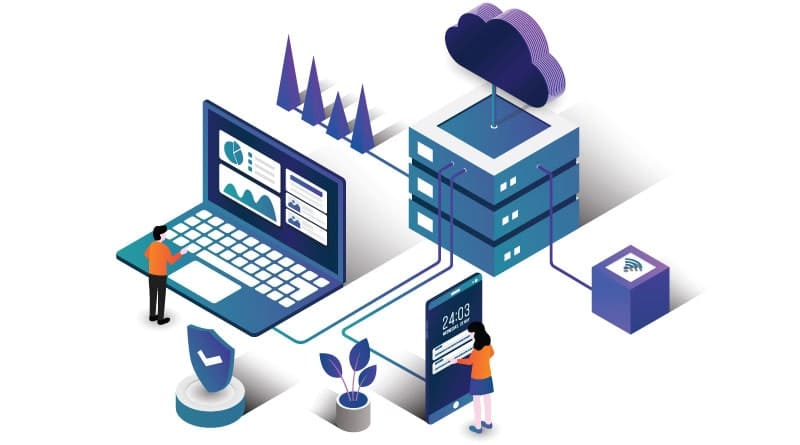
Infrastructure is usually the last thing teams worry about. You launch a project, set up hosting, and move on. If pages load and nothing crashes, it feels like everything is under control.
Problems don’t show up immediately. They build up gradually. A bit more traffic here, a few more users there — and then, at some point, the system starts behaving differently. Not failing, just… less stable than before.
Pages slow down under load, especially during peak hours. Small delays begin to stack up. And suddenly, something that used to be invisible starts demanding attention.
Growth Doesn’t Follow a Clean Pattern
There’s a common assumption that scaling is predictable. More users come in, you add more resources, everything keeps working.
In reality, growth is uneven. Traffic jumps after a release, drops, then spikes again because of a campaign or external factor. For growing projects especially websites, apps, and online platforms this kind of pattern is the norm, not the exception.
If the infrastructure can’t adjust quickly, every spike turns into a problem. Either performance drops, or you end up paying for capacity that sits unused most of the time.
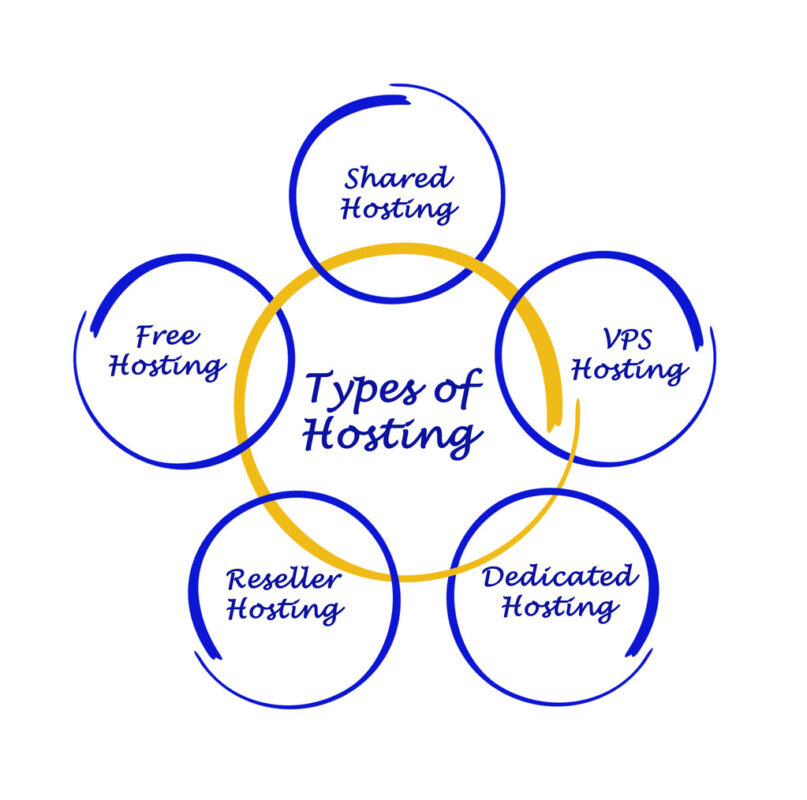
Why VPS Becomes the Practical Middle Ground
| Aspect | Explanation |
|---|
| Core Idea | VPS serves as a practical middle ground for teams that don’t yet need dedicated hardware. |
| Main Need | Teams require flexibility and room to adjust rather than full-scale infrastructure. |
| Why VPS Fits | It provides control over server resources without the complexity of advanced setups. |
| Key Benefits | Allows increasing capacity, tweaking performance, and adapting to changes بسهولة. |
| Primary Advantage | Reduces the need to rebuild the entire environment when requirements change. |
| Overall Focus | Less about raw power, more about minimizing constant rework and improving efficiency. |
Adapting Without Overcommitting
The difference becomes noticeable when infrastructure decisions stop being “final.”
Teams using VPS rental solutions for scalable projects tend to handle growth more спокойно. Instead of locking into fixed configurations, they adjust server resources as traffic changes, whether they’re running growing projects, supporting websites and apps, or managing online platforms with unpredictable load.
This approach makes it easier to handle traffic spikes without overpaying. Flexible pricing, stable uptime, and the ability to scale step by step give teams more control over both performance and costs.
You don’t have to guess your future capacity upfront — and that alone removes a lot of pressure.
Cost Control Is Part of the Problem
Infrastructure decisions are rarely just technical.
Overprovisioning feels safe, but it burns budget quickly. Underprovisioning saves money, but leads to instability. Most teams end up oscillating between the two, especially when growth is inconsistent.
A flexible model doesn’t eliminate this trade-off, but it makes it manageable. When you can scale up or down without long-term commitments, you’re reacting to real usage not predictions.
Infrastructure Changes Even If You Ignore It
One of the more subtle issues is that infrastructure evolves whether you plan for it or not.
New features introduce different нагрузку. User behavior shifts. Integrations add complexity in places that weren’t designed for it. Even if nothing “breaks,” the system becomes harder to manage over time.
Teams that accept this and treat infrastructure as something adjustable tend to avoid bigger problems later. Those who don’t usually end up rewriting or migrating under pressure.
The Bottom Line
Most infrastructure problems don’t start as problems. They start as small mismatche between how a system was set up and how it’s actually being used.
At first, it’s easy to ignore. Then it turns into constant adjustments, quick fixes, and workarounds that slowly pile up.
What’s missing in those situations isn’t more power. It’s the ability to adapt without rethinking everything each time something changes.
VPS doesn’t remove that complexity completely. But it gives you enough flexibility to keep things under control while the project is still evolving — which, for most teams, is exactly where the real pressure is.