



Gone are the days when banks and lending institutions used to think digital banking was simply about putting their services online. The current wave of digital banking solutions includes more than a website and a social media presence. So, what is the future of digital banking solutions with AI and automation?
Now, there are AI-orchestrated and automated processes, customer-centric journeys, personalizing everything from borrowing to repayment, and so much more.
Self-service solutions are now AI-led, and debt collection processes are automated, which makes compliance easier. Moreover, the entire customer journey doesn’t seem overwhelming to borrowers. Banks and NBFCs also don’t have to put their debt collection and customer trust on two ends of a seesaw that is off-balance.
That’s not all. The use of AI and automation is transforming digital banking across web, app, and messaging channels. Here’s how this new wave is transforming customer engagement–
Why Customer Engagement is Being Reimagined
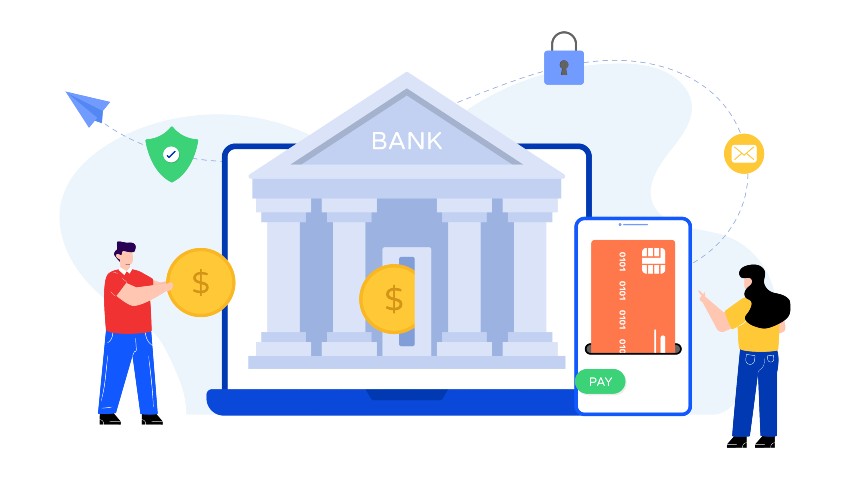
For years, engagement meant reminders and generic outreach. Today, it’s about timely guidance, transparent resolution, and frictionless self‑service.
Global adoption of AI assistants has accelerated this shift: Bank of America’s “Erica” logged hundreds of millions of interactions, and major institutions reported double‑digit growth in digital usage as AI scaled support without sacrificing quality.
At the same time, customers expect personalized, mobile‑first experiences and clear consent, particularly in India’s fast‑digitizing market. The result? Well, this demand shaped journeys that explain options, respect preferences, and resolve issues in minutes.
As one of the tech-powered enablers of such a smooth customer-first and AI-led transition, Creditas enables the adoption of this direction for none other than Kotak Mahindra Bank. Their DIY digital repayment platform delivers a personalized, non‑intrusive experience for missed repayments with multilingual support and multiple payment modes.
The AI/ML Capability Stack for Digital Banking Solutions

The latest AI/ML capability stacks empowering digital banking solutions include AI-powered analytics, no-code workflow agility, and AI-powered decisioning:
AI-Powered Integrated Dashboards
Creditas’s digital debt collections platform features AI-powered integrated dashboards that bring together data from various channels (calls, chats, messages, and transactions) into a unified interface.
These dashboards provide real-time analytics and actionable insights, allowing teams to monitor delinquency trends, track performance metrics, and make data-driven decisions instantly.
By leveraging AI, Creditas turns unstructured data into structured insights, enriching customer profiles and enabling adaptive journeys.
Decisioning & Next‑Best‑Action.
Modern digital banking solutions thrive on machine learning in finance that reads real‑time signals (behavioral, transactional, and channel interactions) to decide the next best message, offer, or reassurance.
Deployed at scale, ML‑powered decision engines lift acquisition, CLV, and cost‑to‑serve by automating document processing, reviews, and personalized outreach.
Data Enrichment & Analytics
Banks need unified insight across calls, chats, messages, and transactions. Creditas’s platform philosophy includes turning unstructured data into useful insights and amplifying customer profiles. This approach supports adaptive journeys and campaign precision at scale.
No‑code Workflow Agility
Winning teams compress journey cycles from months to weeks via no‑code workflow: marketers and risk teams can A/B test content, timing, and channel mixes rapidly, while analytics expose performance across cohorts. A robust orchestration layer ensures continuity across interfaces and accelerates cycles without heavy engineering overhead.
Omnichannel Communication Strategy: from Multi‑channel to Orchestrated Journeys
Banks and NBFCs have one problem in common, and that’s compliance risk and frustrated customers struggling with inconsistent suggestions and information.
The reason? Fragmented data and inconsistent messaging across channels are very much the issue.
That’s why leaders are moving from “omnichannel sameness” to context‑driven interactions built on a unified data fabric and continuous oversight of AI‑generated content. An omnichannel strategy integrates voice, chat, SMS, RCS, email, WhatsApp, and app notifications into a single conversation; AI handles routine tasks across digital channels, while voice becomes the escalation path for complex, high‑emotion cases where empathy and clarity matter most.
To make this work, banks need a governance model that aligns product copy, AI outputs, and partner messaging, plus instrumentation that tracks every journey end‑to‑end.
Risk Assessment Automation Inside Engagement Journeys
Automated engagement cannot ignore risk and compliance. Risk assessment automation must be journey‑native: embedding KYC/AML checks, fraud alerts, consent capture, and explainability into flows rather than bolting them on.
A recent IBM Institute for Business Value survey found that fraud detection and cybersecurity are the top areas where AI delivers business value for risk and compliance teams.
Complementary guidance shows how automation reduces manual review, speeds decisions, and improves monitoring accuracy when integrated with core banking systems, which is key to scaling digital channels responsibly.
Practical KPIs here include false‑positive rates, decision turnaround time, audit readiness, and the resolution speed of compliance alerts.
Self‑Serve Resolution: Lessons from DIY Repayment
A DIY repayment journey, designed by Creditas, uses past and real‑time signals to personalize each step. Timed nudges (right language, right channel, right moment) and built‑in support help customers resolve dues quickly and at a lower cost.
For lenders, replicable patterns include persona‑driven messaging, vernacular libraries, multi‑payment options, and consolidated relationship views that simplify decisions for borrowers.
Building the Unified Operating Model
When it comes to building a unified operation model, banks and NBFCs must focus on the following:
People + Process + Platform
Replace channel‑level KPIs with journey KPIs (self‑serve completion, time to resolution, CSAT/NPS), and empower cross‑functional squads (marketing, risk, collections) to iterate together. An experienced orchestration engine sits atop a unified data fabric, deciding the next best action irrespective of interface.
Tech Blueprint
A reference architecture typically includes:
- Data fabric: event‑driven ingestion of behavioral, transactional, and third‑party signals.
- Decisioning layer: ML models for segmentation, risk scoring, and content selection with explainable AI.
- Orchestration & channels: campaign automation across email/SMS/IVR/WhatsApp/app, with human‑in‑the‑loop escalation to voice for exceptions.
- Analytics & dashboards: real‑time widgets to bring reports to life, exposing performance at granular levels and enabling faster optimization.
Metrics & proof points to track
To demonstrate durable value for lenders, track: engagement rate, self‑serve completion, cost‑to‑collect, delinquency resolution time, CSAT/NPS, and portfolio health (flow into NPA, promise‑to‑pay adherence).
Visualize these in Ethera‑style analytics so operations and leadership can drill into cohorts, channels, and content variants in real time.
For a more Transparent Future of Banking!
Digital banking solutions are transforming as we speak, and it’s needless to say that AI and automation are at the core of this transformation. AI and ML have been driving this shift by turning engagement into a predictive, personalized, and compliant set of journeys.
When banks blend machine learning in finance with a robust omnichannel communication strategy and risk assessment automation, they unlock higher resolution rates at lower cost, while delivering experiences that feel faster, fairer, and more helpful to customers.