



In today’s hyper-competitive digital economy, 3d visualization has emerged as a strategic asset, not merely a visual luxury; by transforming abstract concepts into immersive, interactive models, businesses streamline decision-making, reduce costly physical prototyping, and dramatically improve customer engagement ultimately driving higher profit margins and faster time-to-market. What was once the domain of architects and game designers has now woven itself into the fabric of industries as diverse as healthcare, manufacturing, real estate, entertainment, and even finance.
3d visualization is the process of creating graphical content that simulates three-dimensional space using specialized software and computational techniques.
Unlike traditional two-dimensional images, 3D models allow viewers to explore objects from every angle, observe minute details, and understand spatial relationships with remarkable clarity.
This shift from static representation to dynamic immersion signals a new era in how information is communicated and understood.
From Impression to Precision
The true power of 3d visualization lies in its ability to bridge imagination and reality. In architecture and construction, for example, blueprints and sketches have given way to photorealistic renderings that portray buildings before a single brick is laid. Stakeholders can virtually walk through proposed spaces, adjust lighting, alter materials, and experiment with layouts in real time. This not only minimizes misinterpretation but also reduces revision cycles and waste, resulting in significant financial and environmental benefits.
- Manufacturing industries use 3d visualization to simulate product assembly and performance under varying conditions.
- Engineers can test tolerances, identify structural weaknesses, and refine designs without the expense of producing multiple prototypes.
- Each iteration becomes a data-informed improvement, shrinking development timelines while elevating quality standards.
A Catalyst for Better Decision-Making
In an age where data dominates, clarity is currency. Three-dimensional models convert complex datasets into coherent visual narratives. This is particularly impactful in sectors like urban planning or logistics, where planners use layered 3D maps to visualize population density, traffic patterns, or infrastructure needs. Instead of deciphering dense charts, decision-makers can navigate through scenarios, compare outcomes, and choose optimized solutions with confidence.
Healthcare professionals have also found profound value in this technology. Surgeons rely on 3D-rendered images from MRI and CT scans to plan intricate procedures, rehearse surgical approaches, and understand patient-specific anatomy. These models enhance precision and reduce operative risks, turning visual insight into life-saving foresight.
Enhancing Human Engagement
Beyond analytics, 3d visualization reshapes how people emotionally connect with content. Real estate agents use immersive virtual tours to showcase properties to global buyers, offering a sense of presence that photographs cannot achieve. Automotive companies allow customers to customize vehicles in real time rotating models, selecting finishes, and viewing interior details creating a personalized buying journey that fosters brand loyalty.
In the entertainment world, 3D graphics have revolutionized storytelling. Films and video games leverage advanced visualization to craft believable digital universes, adding depth and realism that engages audiences on a visceral level. The boundaries between the digital and physical continue to blur as virtual reality (VR) and augmented reality (AR) platforms integrate deeply with 3D content.
The Technology Behind the Magic
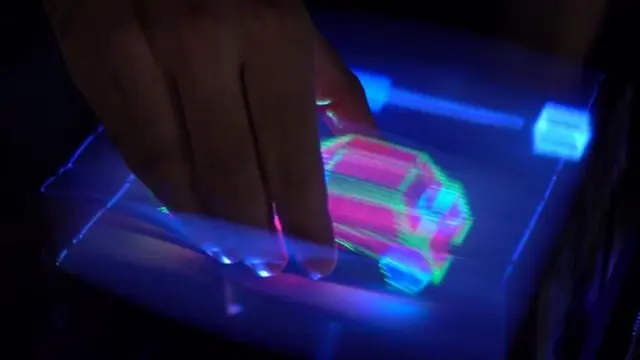
The sophistication of 3d visualization rests on a foundation of cutting-edge tools and technologies. Software such as Blender, AutoCAD, Unity, and Unreal Engine enables artists and engineers to model textures, simulate lighting, and render environments with cinematic quality. High-performance GPUs accelerate complex computations, allowing real-time rendering that supports interactive exploration.
- Advancements in AI and machine learning have further expanded creative possibilities.
- Automated modeling, procedural generation, and intelligent texture mapping enable faster production cycles and unprecedented levels of detail.
- As cloud computing continues to evolve, large teams can collaborate seamlessly on shared 3D assets, making the design process more agile and globally accessible.
Business Transformation Through Visualization
The commercial implications of 3d visualization extend well beyond design aesthetics. E-commerce retailers are integrating 3D product views to reduce return rates and increase buyer confidence. Shoppers who can spin, zoom, and inspect items before purchase are more likely to commit and less likely to experience post-purchase dissatisfaction.
Training and education sectors also benefit. Simulated 3D environments provide immersive learning experiences that outperform traditional methods. From aircraft maintenance to medical training, realistic simulations help learners practice complex tasks in risk-free environments, improving retention and competency.
Challenges and Future Potential
Despite its tremendous promise, 3d visualization is not without challenges. High-quality rendering can demand significant computational resources, and specialized expertise is often required to achieve polished results. However, as technology becomes more democratized and user-friendly, barriers to entry continue to fall. Browser-based platforms and AI-assisted design tools are opening the doors to creators with minimal technical backgrounds.
Looking ahead, the convergence of 3d visualization with emerging technologies such as the metaverse, digital twins, and spatial computing suggests an even more transformative future. Entire industries may soon operate within shared virtual ecosystems, where design, collaboration, and commerce unfold in persistent 3D environments.
A New Visual Language
Ultimately, 3d visualization is more than a technological advancement—it is a new visual language that reshapes how we communicate, innovate, and perceive reality. By converting ideas into immersive experiences, it empowers individuals and enterprises alike to transcend traditional boundaries. As our tools grow smarter and our imaginations bolder, the three-dimensional realm will not merely illustrate the future; it will define it.
In an era where clarity drives credibility and innovation fuels growth, mastering 3d visualization is not just an option—it is a strategic necessity, paving the way for richer understanding, smarter decisions, and a more visually intelligent world.